Meadow Care
10 Common Mistakes to Avoid When Creating a Meadow Garden
Sowing a meadow sounds like the easy option. You scatter seed, wait for summer, and a haze of ox-eye daisies and buttercups appears. In practice, most disappointing meadows fail for the same handful of reasons, and nearly all of them happen before a single seed goes into the ground. The good news is that every one of these mistakes is avoidable. Knowing them in advance saves years of frustration.
Rushing the Ground Preparation
The biggest single reason meadow sowings fail is competition from what is already growing. Couch grass, nettles, docks, thistles and brambles will not politely step aside for wildflowers; they will smother them. If you are converting lawn or rough ground, you need to exhaust the existing vegetation first, usually with a season of repeated cutting, or by stripping the turf and the top few centimetres of soil.
Do not cut corners here. A fortnight of digging, followed by scattering seed onto a crumbly surface, almost always ends in a patch of annual weeds and bare gaps by July. Give the preparation a full growing season if you can. It is dull work, but it is the difference between a meadow and a mess.
Feeding the Soil When a Meadow Wants the Opposite
Habit is hard to break. Gardeners reach for compost, manure and fertiliser by reflex, but wildflower meadows evolved on thin, hungry soils. Feed them and the vigorous thugs win every time. Coarse grasses, nettle and hogweed bulk up, while the delicate species you actually wanted are crowded out.
So: no manure, no compost dug in, no general-purpose fertiliser, no mulching. If your soil is rich, dark and crumbly, take the topsoil off to a spade's depth and sow into what lies beneath. If it is already poor, count yourself lucky and sow straight in. The only thing worth adding is a light rake to create a tilth for the seed to sit in.
Choosing a Seed Mix That Doesn't Fit
Seed mixes are not interchangeable. A blend designed for chalk downland will sulk on heavy clay; a wetland mix will fail on a dry, sandy bank. Before ordering, check two things: your soil type and how much sun the site gets. Most meadow species need at least half a day of full sun. A shaded corner will never become a flower meadow, however good the seed is.
The annual mix trap
Cheap "wildflower" mixes often contain a high proportion of cornfield annuals such as cornflower, poppy and corn marigold. These look spectacular in the first summer and then vanish, because they are annuals that need disturbed soil to regenerate. That is not a meadow; it is a one-season display. If you want the cornfield look, enjoy it knowingly and resow each year. For something lasting, choose a native perennial mix with a grass component of fine-leaved species such as creeping fescue and bent, never agricultural rye-grass.
Where you can, include yellow rattle. It is semi-parasitic on grass roots and weakens the grasses that would otherwise dominate, giving flowers room to establish. Sow it with the rest of the mix and let it find its own level.
Sowing Too Deep, Too Thick or at the Wrong Time
Wildflower seed is small, and most of it needs light to germinate. Bury it under a centimetre of soil and much of it will never appear. The right method is to rake the surface, scatter the seed at the rate on the packet (mixing it with dry sand or spent compost helps you see where it has landed), then press it in with a board or simply walk over the ground. Firm, not buried.
Timing matters just as much. Early autumn is the safest window on most soils: the ground is still warm, rain is reliable, and seedlings get a head start before winter. Spring sowing works on light, free-draining ground. Midsummer sowing, when the soil is dry and weeds are rampant, is the hardest of all, and rarely worth the gamble.
Mowing at the Wrong Moments
More meadows are ruined by the mower than by drought or slug damage. The usual culprits:
- Leaving it completely uncut in year one. The grasses shoot up, flop over and smother the young wildflowers beneath them.
- Cutting too short. Scalping to 2cm stresses the plants and opens the ground to weeds. Aim for roughly 5–7cm.
- Cutting in one go and leaving the clippings. Rotted cuttings form a mat that kills what is underneath. Always rake them off.
- Missing the main cut. The late-summer or early-autumn cut, taken after seed has set, is what keeps fertility low and the sward open.
- Mowing through the flowering peak. You lose the flowers, the seed and the insects in one afternoon.
The rhythm for an established meadow is a cut in late summer, a second tidy in autumn if growth is strong, and nothing over winter. If you want a shorter, flower-rich sward rather than a tall one, an extra cut in spring keeps the grasses in check.
Forgetting Edges, Paths and Access
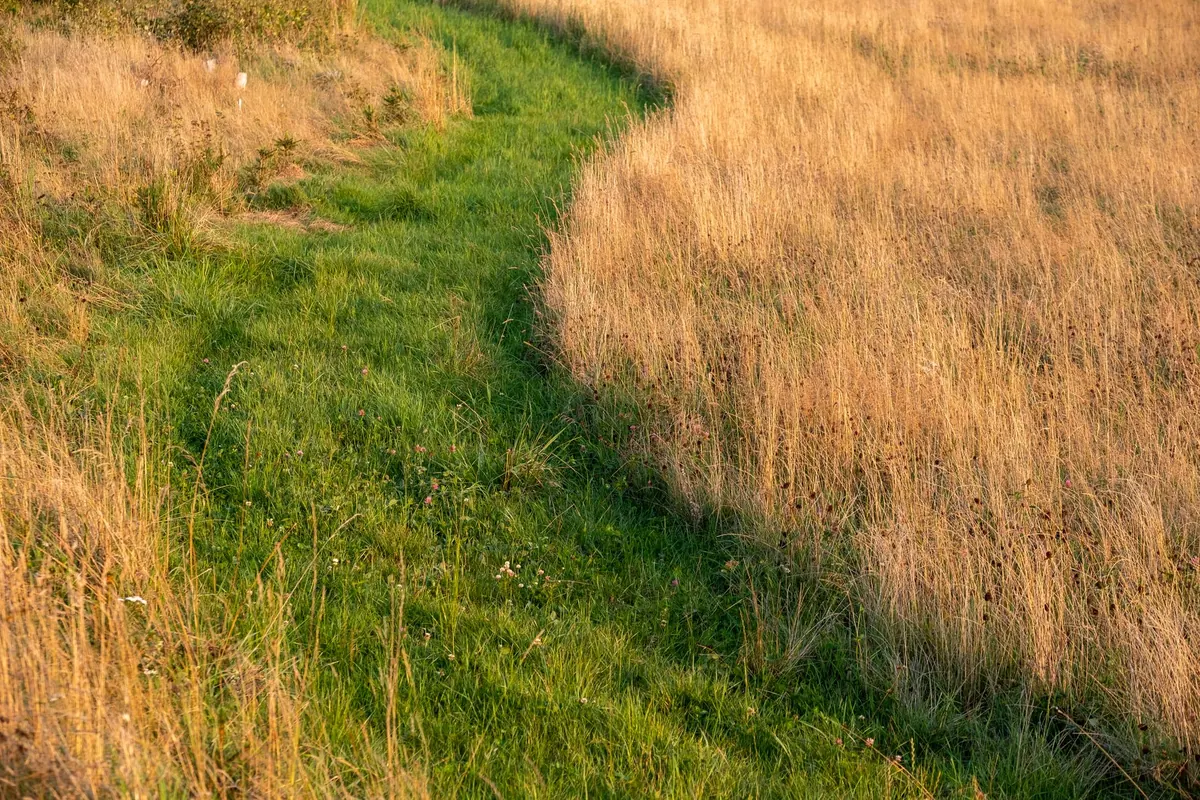
A meadow with no defined edge reads as neglect, especially next to a border or a neighbour's lawn. A mown strip around the boundary, and a path or two mown through the middle, does two things. It frames the planting so the eye sees intention rather than untidiness, and it gives you somewhere dry to walk in June when the grass is waist-high. Keep the paths cut low, leave the rest long, and the whole thing looks deliberate.
Give It Three Years, Not Three Weeks
The first summer of a new meadow is rarely beautiful. Expect a flush of annual weeds, thin patches and far more green than flower. That is normal. Most perennial meadows only begin to look like the pictures in their second or third year, once the flowers have set seed and spread.
Keep cutting, keep removing the clippings, and resist the urge to feed or water. Meadow-making is largely about what you don't do: don't enrich the soil, don't oversow, don't mow it flat, and don't give up before it has had a proper chance.
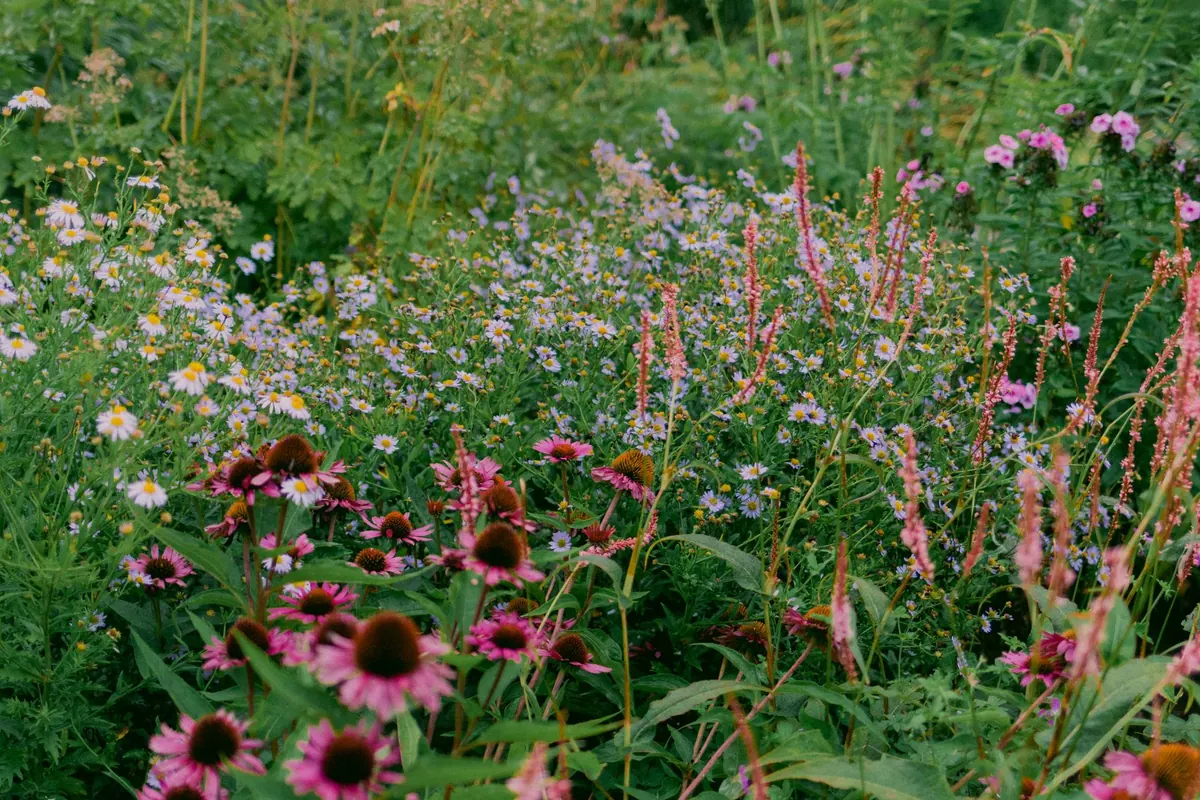
Photo: Maria Tyutina / Pexels
Related Articles