Planting
How to Sow a Wildflower Meadow from Seed: A Step-by-Step Guide for UK Gardens
Few garden projects repay patience like a wildflower meadow. It is also one of the easiest things to get wrong. Most disappointing meadows are not the result of bad seed, but of ground that was too rich, too weedy, or sown too thickly. Sort the preparation and the rest is largely a matter of waiting. Here is how to do it properly, from clearing the ground to the first hay cut.
Choosing the Right Spot
Wildflowers want sun. Aim for a patch that gets at least six hours of direct light in summer, away from the drip line of trees and hedges — roots and leaf litter both cause trouble. Size matters less than you might think. A strip three or four metres long along a lawn edge will work, and it is far easier to manage than a huge area you later resent.
The bigger issue is fertility. Most British garden soils are too rich for meadow flowers. Nettles, docks, cow parsley and thick, glossy grass all point to high nutrient levels, and on ground like that the grasses will simply smother everything else. Fine grasses, clover, moss and thin, sparse growth suggest poorer soil, which is exactly what you want. Be honest about what you have before you buy a single seed.
Preparing the Ground
Spend more time here than on sowing. Cut the existing vegetation as short as you can, then remove it. On a small patch, a spade and a bit of effort will do; for anything larger, hire a turf cutter or smother the area under cardboard weighted with soil, or black polythene, for a full growing season. Perennial weeds such as nettle, dock and thistle need repeated attention — dig out the roots rather than skimming over them. Do not dig in compost, manure or fertiliser, and avoid ground that has been treated with a long-lasting weedkiller.
Should you strip the topsoil?
On fertile ground, yes. Taking off the top five to ten centimetres of topsoil exposes poorer subsoil beneath, which gives wildflowers the breathing space they need. It feels drastic, but it is the single most effective thing you can do on a rich garden soil. If your soil is already thin, sandy or chalky, leave it alone and simply clear the weeds.
Choosing Your Seed Mix
Buy from a supplier who sells UK-origin native seed, and read the species list rather than the picture on the front. Broadly, you have two options: a perennial meadow mix, which takes a year or two to settle but lasts, or a cornfield annual mix of poppies, cornflower and corn marigold for a quick first-summer show. Many gardeners sow both, using the annuals as a colourful nurse crop while the perennials establish.
Check the following before you order:
- Origin — seed described as native to Britain, ideally of British provenance.
- The grass-to-flower balance — most meadow mixes are around 80 per cent grass by weight, using fine species such as sheep's fescue, crested dogstail, common bent and smaller cat's-tail.
- Soil suitability — knapweed, oxeye daisy, bird's-foot trefoil, cowslip and field scabious suit drier ground; ragged robin, meadowsweet and great burnet prefer damp clay.
- Yellow rattle — either included in the mix or bought separately. This native annual parasitises grass roots and is the best natural tool for keeping vigorous grasses in check.
- Sowing rate and sow-by date — the supplier's figures, not a guess.
When to Sow
Late August to mid-October is the best window for native perennials. The soil is still warm, autumn rain does the watering for you, and species that need a cold spell to break dormancy — yellow rattle especially — get the winter they require. Spring sowing from March to April works, but germination is less even and you may need to water. Avoid sowing into waterlogged ground or during a hard frost, and never sow on a windy day.
How to Sow, Step by Step
- Rake the cleared ground to break up clods, firm it by treading, then rake again to leave a fine, level surface.
- Weigh out the correct amount of seed for your area. Pure wildflower mixes are typically sown at one to two grams per square metre; grass-and-flower mixes at four to five grams.
- Mix the seed with a carrier — dry sand, sawdust or fine dry soil — at roughly ten parts carrier to one part seed. This is the trick that stops you dumping half the seed in one corner.
- Divide the mixture in two. Broadcast the first half walking in one direction, then the second half at right angles to it.
- Rake very lightly. Many wildflower seeds need light to germinate, so aim for contact with the soil rather than burial. A few millimetres is plenty.
- Firm the surface with a roller or by walking over it on boards.
- Water gently if the soil is dry and keep it damp for the first two or three weeks.
Aftercare Through the First Year
Do not expect much at first. Some species germinate within weeks; others sit quietly for a season or more. A sparse, grassy-looking patch in year one is normal. Water only during genuine dry spells, and hand-pull or spot-treat thistles, docks and nettles before they set seed.
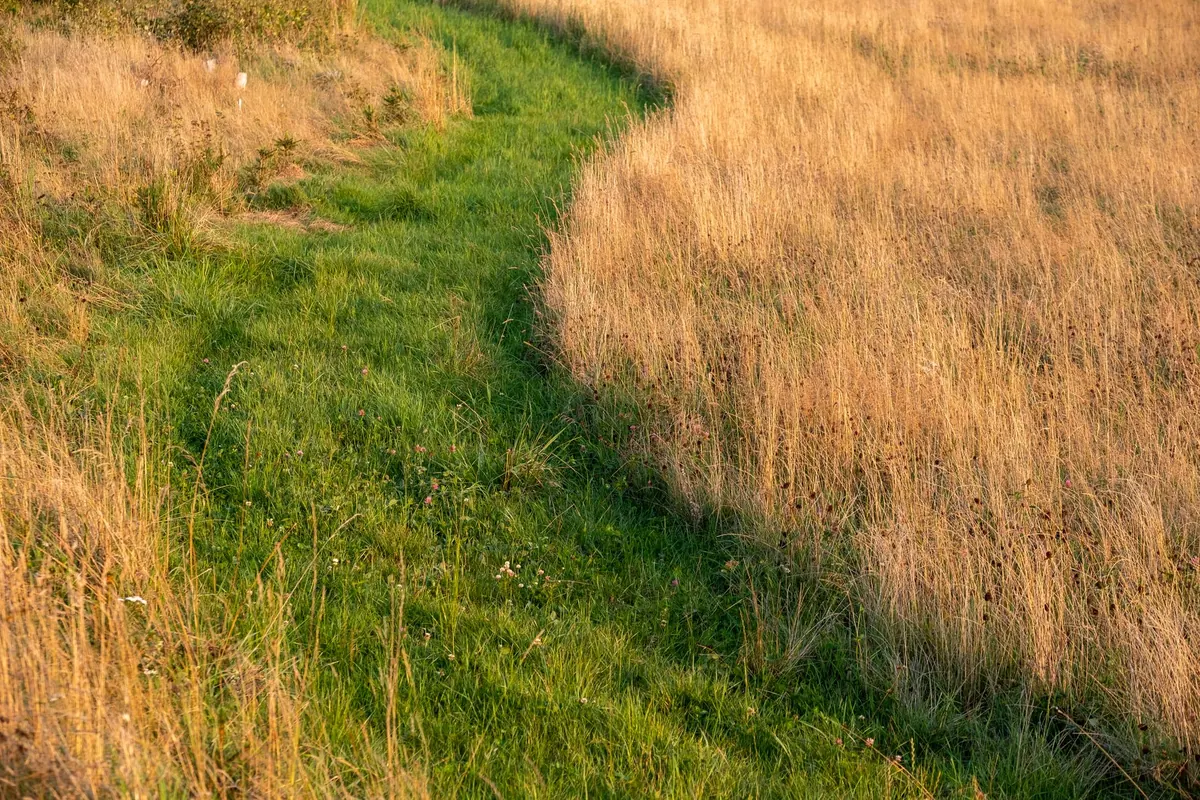
The important job is the cut. Leave the meadow uncut through the first spring and summer so plants can flower and drop seed, then cut to about five to seven centimetres in late summer or early autumn. Bag up every cutting and take it away — this removes nutrients and is the step most people skip. If growth is still rank in late autumn, cut again to around ten centimetres. Keep a mown path through or around the patch so you can enjoy it.
The Long View: Managing a Meadow Year by Year
From the second year, follow the traditional rhythm: no cut in spring or early summer, a main hay cut in late July or August once flowers have set seed, then a second cut in early autumn if needed. Leave cuttings lying for a day or two so seed drops, then remove them. Never feed the ground, and never add compost.
Patch up bare spots with extra seed or plug plants in autumn. Expect two or three years before it looks like the meadow you imagined — and after that, less work each season and far more life in the garden from May onwards.
Photo: JACLOU-DL / Pixabay
Related Articles